Treat water, shampoo and product contact as a workflow exposure; control it before relying on a stylist to tolerate damaged hands.
Count the work that gets hands wet
Wet work is more than shampooing. Include rinsing color, cleaning bowls and tools, wiping stations, handwashing, laundering and time inside occlusive gloves. Map a normal busy day by task, product, contact route and duration. The goal is not a universal exposure score; it is to find preventable contact and concentrated blocks.
The UK Health and Safety Executive's salon guidance says frequent contact with water and shampoo can irritate skin and that hairdressing and cleaning products can cause dermatitis or skin allergy. Its broader skin guidance describes prolonged or frequent water contact, especially with soaps and chemicals, as wet work. These are authoritative occupational controls, but a U.S. salon must also check its own federal, state and local requirements. Start that local check with the salon-license verification guide.
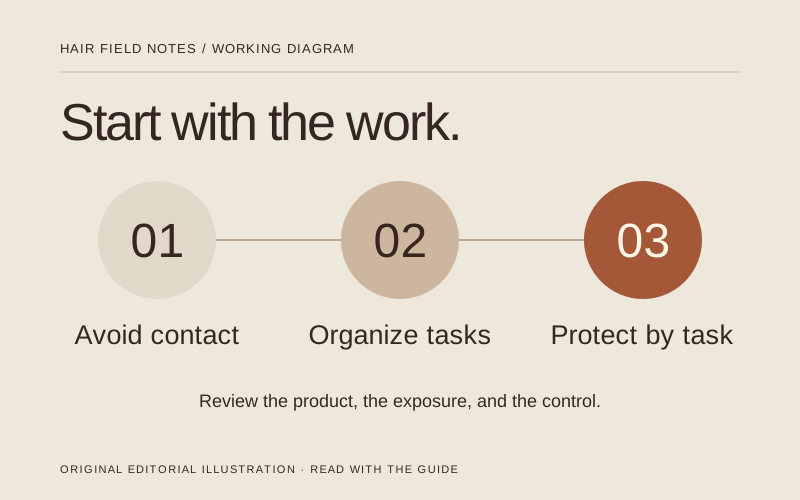
Control contact in a practical order
First ask whether contact can be avoided: use tools rather than bare hands for mixing, organize rinsing to prevent splashes, maintain dispensers, and clean a spill promptly instead of redistributing it. Then change the workflow: alternate tasks where staffing allows, keep dry supplies within reach, and avoid assigning the same person an uninterrupted block of washing and cleanup. Finally select personal protection for the product and task.
HSE advises disposable non-latex gloves for shampooing, coloring and bleaching, changed between clients, plus thorough hand drying and frequent moisturizing. Its salon glove example checks safety data sheets and manufacturer information before choosing material. “Nitrile” is not permission to ignore a product's instructions or the wearer's fit and comfort.
Make the glove station work
Stock the sizes people actually need and a longer cuff where splash can run toward the wrist. Train staff to put on and remove gloves without transferring product to skin, and replace a torn or contaminated pair. HSE recommends smooth, snug-fitting disposable gloves and notes that a folded long cuff can help stop liquid running inside. It advises avoiding latex because of skin-reaction concerns and powdered gloves because of asthma concerns.
Do not keep the same disposable pair through multiple clients. Do not assume gloves eliminate wet work: sweat and prolonged occlusion can also affect skin, and a glove that is wrong for a chemical may not protect as intended. The salon's risk assessment and the product safety information govern the task.
Build care and reporting into paid work
Place gentle handwashing, soft drying and moisturizer where staff can use them without abandoning a client. Schedule brief skin checks and give workers a clear route to report itching, dryness, redness, cracking or other changes early. HSE says dry, cracked skin can be an early sign of dermatitis and advises regular checks. A supervisor should respond by reviewing exposure and controls, not by asking the worker to self-diagnose or simply switch lotions.
Healthcare assessment belongs with a qualified professional. This guide does not recommend treatment, name a “hypoallergenic” glove or decide whether a particular reaction is irritant or allergic.
Use a one-week salon audit
For seven representative days, tally shampoo/rinse blocks, chemical-service glove changes, cleaning tasks, spill events, hand-care access and reported discomfort. At week's end, choose one engineering or workflow change, one supply change and one training change. Example: move pre-folded long-cuff gloves to every backbar, assign tool washing in shorter rotations, and add a no-bare-hand mixing check to opening procedure.
The audit is an editorial management tool, not a regulatory compliance certificate or prevalence study. Hair Field Notes intentionally omits inherited claims about how common occupational dermatitis is because the available dossier did not contain a freshly verified, population-matched denominator. The practical controls stand without an alarming percentage.
Sources & context
Sources checked on 19 September 2026. The notes below identify their scope; linking a study is not an endorsement or a clinical review. Worked scenarios and editorial frameworks are our own.
- UK HSE · COSHH and hairdressers: key messages ↗Occupational safety guidance · checked 2026-09-19
Supports wet-work/product hazards, ventilation, non-latex disposable gloves, hand drying, moisturizing and skin checks.
- UK HSE · Work-related skin disease FAQs: hairdressing ↗Occupational safety guidance · checked 2026-09-19
Supports snug smooth non-latex gloves, longer cuffs, and dry/cracked skin as an early warning; UK guidance, not a substitute for local law.
- UK HSE · Choosing the right gloves: hairdressing salon example ↗Occupational control example · checked 2026-09-19
Supports task/product review, fit and dexterity considerations, cuffs and manufacturer/SDS checks.
Research drafts are preserved context, not proof for the guide above. Their claims have not all been reverified. Educational information, not medical, legal, or tax advice.