Compare verifiable fit and ownership details against your real services; watts, price and prestige do not add up to a tested ranking.
Write the station brief before the shortlist
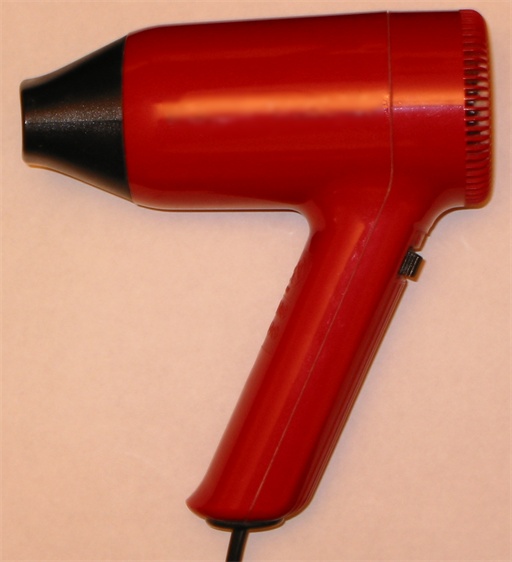
List the work the dryer must do: diffuse low-manipulation finishes, smooth dense sections, rough-dry color services, support short clipper work, travel, or run through a high-volume day. Add outlet location, cord route, storage, noise sensitivity, left- and right-handed use, and the attachments that must stay secure when rotated. A home routine and a busy salon station may produce different priorities.
Do not begin with “professional,” “ionic,” “smart” or a motor acronym. Those are features or claims to investigate. The purchasing question is whether the machine, controls and service arrangement fit the defined workload.
Score control before headline power
Create a hands-on trial sheet: Can heat and airflow be adjusted independently? Can the operator reach the controls without changing grip? Does a cool function latch or require continuous pressure? Do the concentrator and diffuser fit the sections and finishes you perform? Do attachments remain stable? Can the intake be cleaned without a fiddly teardown? Measure weight with the cord and attachment in working position, not from a bare product listing.
A wattage figure is electrical input, not a standardized score for drying speed, temperature stability or hair outcome. Likewise, a claimed sensor rate or ion count is not comparable unless vendors disclose compatible methods. Keep claims in a separate column from observations.
Put safety and provenance at the gate
For a U.S. handheld dryer, check the exact model against current CPSC recalls and warnings and inspect the plug and labeling. CPSC guidance says hand-supported dryers without compliant integral immersion protection are a substantial product hazard. Its August 14, 2025 Remington recall illustrates why the exact model matters: the recalled model lacked an immersion protection device. Never assume that a familiar brand name means every model or seller is unaffected.
Buy through a channel that can identify the seller, model and warranty path. On arrival, preserve the receipt and serial information, inspect the cord and housing, and follow the manufacturer instructions. Stop using a unit with a damaged cord, overheating, arcing, intermittent power or a recalled model disposition that says to stop.
Calculate ownership without inventing prices
Build columns for purchase cost, included attachments, any required stand or adapter, warranty length, commercial-use eligibility, local repair or replacement process, filter availability, return window and the cost of downtime. Enter only current written facts from the manufacturer or authorized seller. Leave a blank as unknown; do not turn it into zero.
A useful scenario: Dryer A has the lower purchase price but no confirmed commercial warranty and an uncertain replacement lead time. Dryer B costs more but has a written commercial-use path and an available loaner from the distributor. The framework identifies the decision; it does not assert that B is cheaper without the salon's failure rate, booking load and actual terms.
Run a reversible station trial
If return terms allow, test representative services with consent and without presenting the trial as research. Record operator comfort, control changes, attachment stability, filter cleaning time and whether the tool can achieve the planned finish without repeated high-exposure passes. Do not publish client “results,” comparative speed or decibel claims from an informal salon trial. Those would require a defined, fair test method.
The 2011 tress study on drying found that temperature, distance and motion affected observed damage, which reinforces technique as part of the purchase. It did not compare today's dryers. Use the heat-exposure guide to audit technique. This guide names no winner, quotes no volatile price and claims no model was laboratory-tested by Hair Field Notes.
Sources & context
Sources checked on 19 September 2026. The notes below identify their scope; linking a study is not an endorsement or a clinical review. Worked scenarios and editorial frameworks are our own.
- CPSC · Hand-Supported Hair Dryers Business Guidance ↗Regulator safety guidance · checked 2026-09-19
Supports the U.S. integral-immersion-protection requirement and substantial-product-hazard framing.
- CPSC · Empower Brands recalls Remington hair dryers ↗Official recall · checked 2026-09-19 · source date 2025-08-14
Concrete example showing why exact-model recall checks and immersion protection matter; not evidence about unrelated models.
- Lee et al. · Hair shaft damage from heat and drying time of hair dryer ↗Peer-reviewed laboratory study · checked 2026-09-19 · source date 2011-11-03
Supports considering heat, distance and motion in technique; does not rank current dryers.
Research drafts are preserved context, not proof for the guide above. Their claims have not all been reverified. Educational information, not medical, legal, or tax advice.